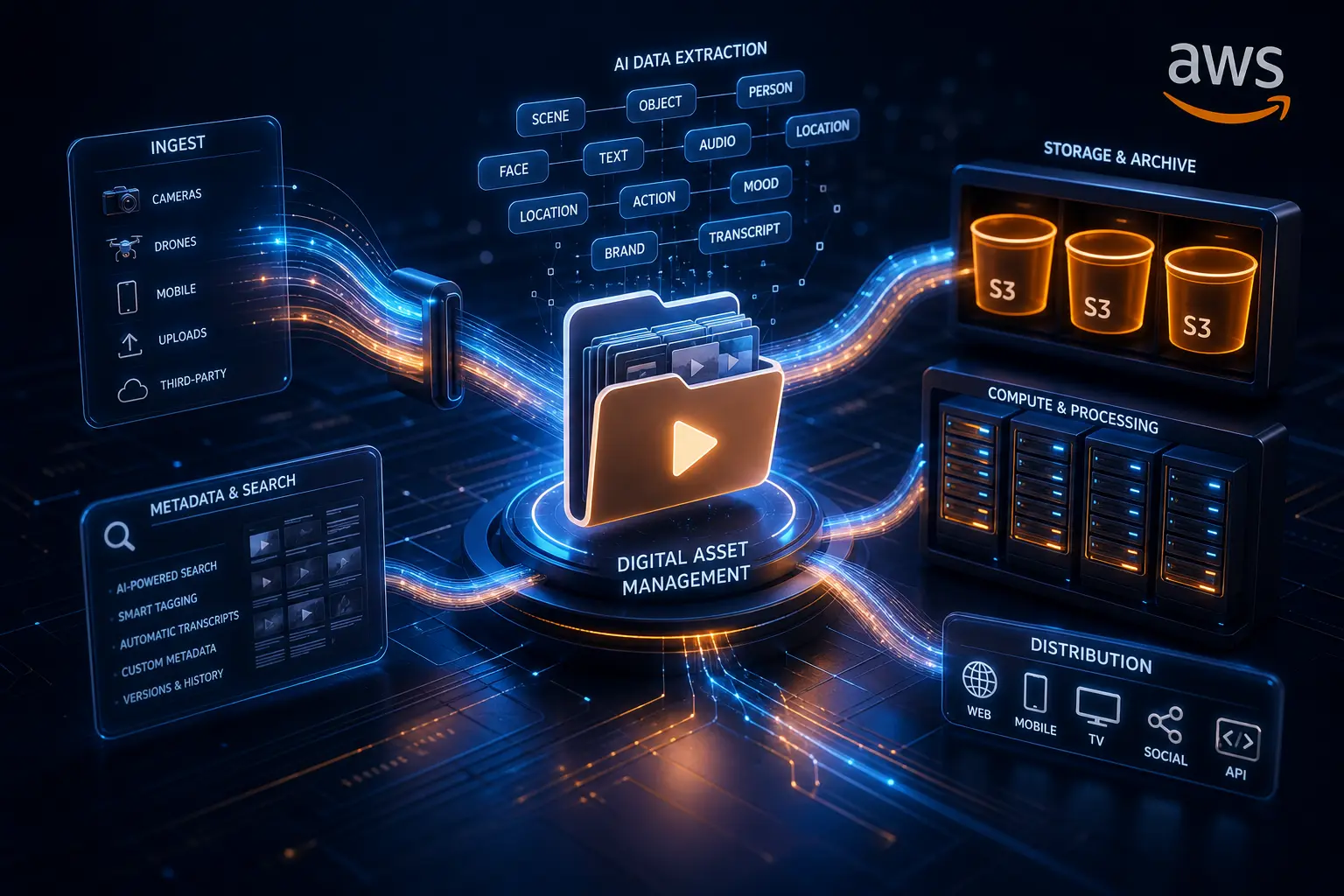
A media pipeline is the automated path a media file follows from capture through tagging, storage, retrieval, and distribution, orchestrated by a Digital Asset Management (DAM) platform, a workflow engine, and tiered cloud storage.
The latest Backlight Media Stats report for 2026 validates a reality I tackle daily when architecting automation pipelines: the primary bottleneck in media is no longer production. Instead, the real challenge is controlling, governing, and repurposing the massive data libraries organisations already own. With media teams now managing nearly a billion assets and over 300 petabytes of data, treating video content as a structured data problem is completely non-negotiable.
Storage as Business Strategy
Every organisation is inadvertently scaling media like a tech company, but very few build the underlying cloud infrastructure to support it. At hundreds of millions of assets, messy folder structures morph into massive operational debt that cripples delivery timelines and inflates cloud costs.
To solve this, I design hybrid architectures that prioritise lifecycle intelligence. A modern Digital Asset Management (DAM) system like Backlight Iconik or Frame.io serves as the central interface, but the backend relies on automated tiering. Active projects live in high-performance environments (or even natively stream to desktops via Frame.io Mounted Storage), but as soon as a project goes dormant, automated policies immediately push that media to cost-effective cloud tiers like AWS S3. For long-term archiving, I configure AWS S3 Glacier to hold decades of footage at fractions of a cent, with the DAM maintaining low-resolution proxies so the files remain entirely searchable.
Treating video content as a structured data problem is non-negotiable.
What is a DAM system?
A Digital Asset Management (DAM) system is a central platform that stores, organises, and retrieves rich media like video, images, and audio using metadata and proxies instead of manual folder structures. In a media pipeline, tools such as Backlight Iconik or Frame.io act as the DAM, giving editors a searchable interface while the heavy files are tiered automatically into AWS S3 or S3 Glacier.
AI Requires Data Governance
Industry reports highlight millions of AI-powered jobs running annually for transcription, visual analysis, and facial recognition, but this means nothing without foundational data governance. You simply cannot automate messy data or expect an AI agent to accurately orchestrate poorly tagged files.
In my workflows, the return on investment for AI only materialises when strict metadata standards are enforced from ingestion. I rely on OpenClaw AI agents running as daemons on dedicated servers to act as the workflow engine. Once a video asset lands in a connected storage bucket, an OpenClaw agent triggers transcription and vision models to analyse the footage, automatically generating standard metadata, transcripts, and even platform-specific social media packages. Because the foundational data is clean, these autonomous agents can accurately cluster topics and format outputs without hallucinating.
How does AI automate media metadata?
Once a video lands in connected storage, an AI agent triggers transcription and vision models to analyse the footage and generate standard metadata, transcripts, and platform-specific social packages automatically. This only works reliably when strict metadata standards are enforced from ingestion, because AI cannot accurately orchestrate files that are poorly tagged.
Automating Media Pipelines
To handle the sheer volume of modern media, workflows must prioritise intelligent orchestration and a centralised source of truth over manual human intervention. Media teams processed over 500 million automated background jobs recently for transcoding, archiving, and metadata updates.
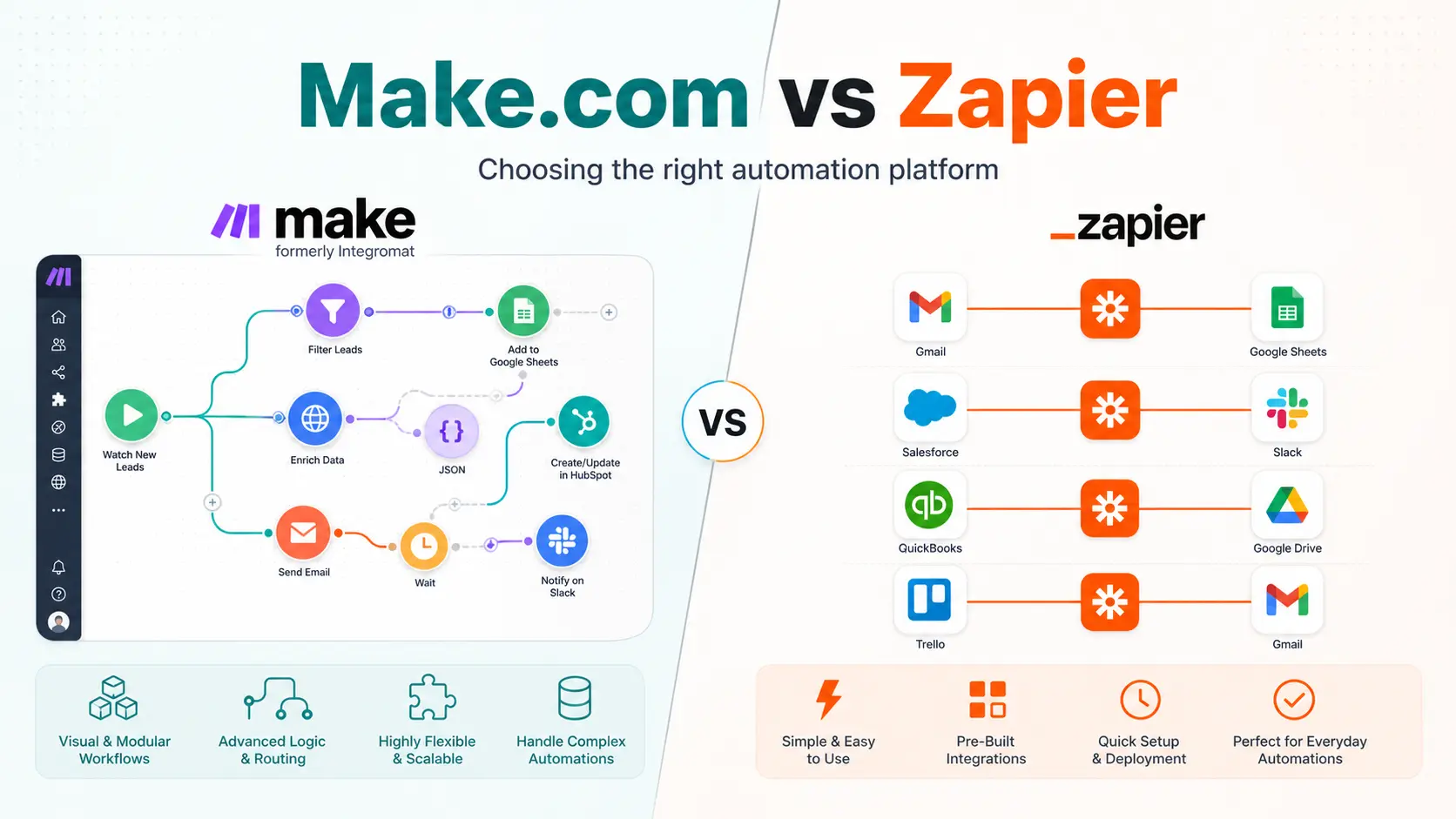
I build these event-driven pipelines utilising robust integration tools like Make.com OpenCode ClickUp. For example, a webhook in Frame.io can trigger a Make.com scenario the exact second a client leaves an approval comment. Make.com then updates the status in your project management software, pings the relevant editor in Slack, and initiates a transfer of the approved high-resolution file to a specific AWS S3 bucket for public hosting via CloudFront. Furthermore, for teams transitioning from fragmented setups like Dropbox, I script server-side synchronisations using Python and AWS CLIs to automatically mirror those file trees directly into AWS S3, ensuring legacy data safely migrates into the governed ecosystem.
Stop Hunting for Files and Start Building Invisible Infrastructure
If your brand is generating media faster than you can organise it, throwing more headcount at the problem isn't the solution. You need robust, automated pipelines.
As an infrastructure and automation consultant, I specialise in building the "invisible infrastructure" that allows growth-stage teams to scale without the operational bloat. Whether you need to connect your DAM to cost-effective AWS S3 buckets, deploy AI agents for automated metadata extraction, or orchestrate complex approval workflows through Make.com, I can help you build it.
Stop treating your footage as single-use content and start treating it like a searchable, structured database. Reach out today, and let's chat about architecting a media automation pipeline tailored specifically to your business.